
What They Are, Why They Matter, and When You Actually Need One
If you've spent any time looking at working dog gear, you've probably seen the name COBRA® buckle. It shows up on tactical collars, K9 duty gear, and high-end equipment across the board. Here's a factual breakdown of what it is, what it does, and whether it makes sense for your dog.
What is a COBRA® buckle?
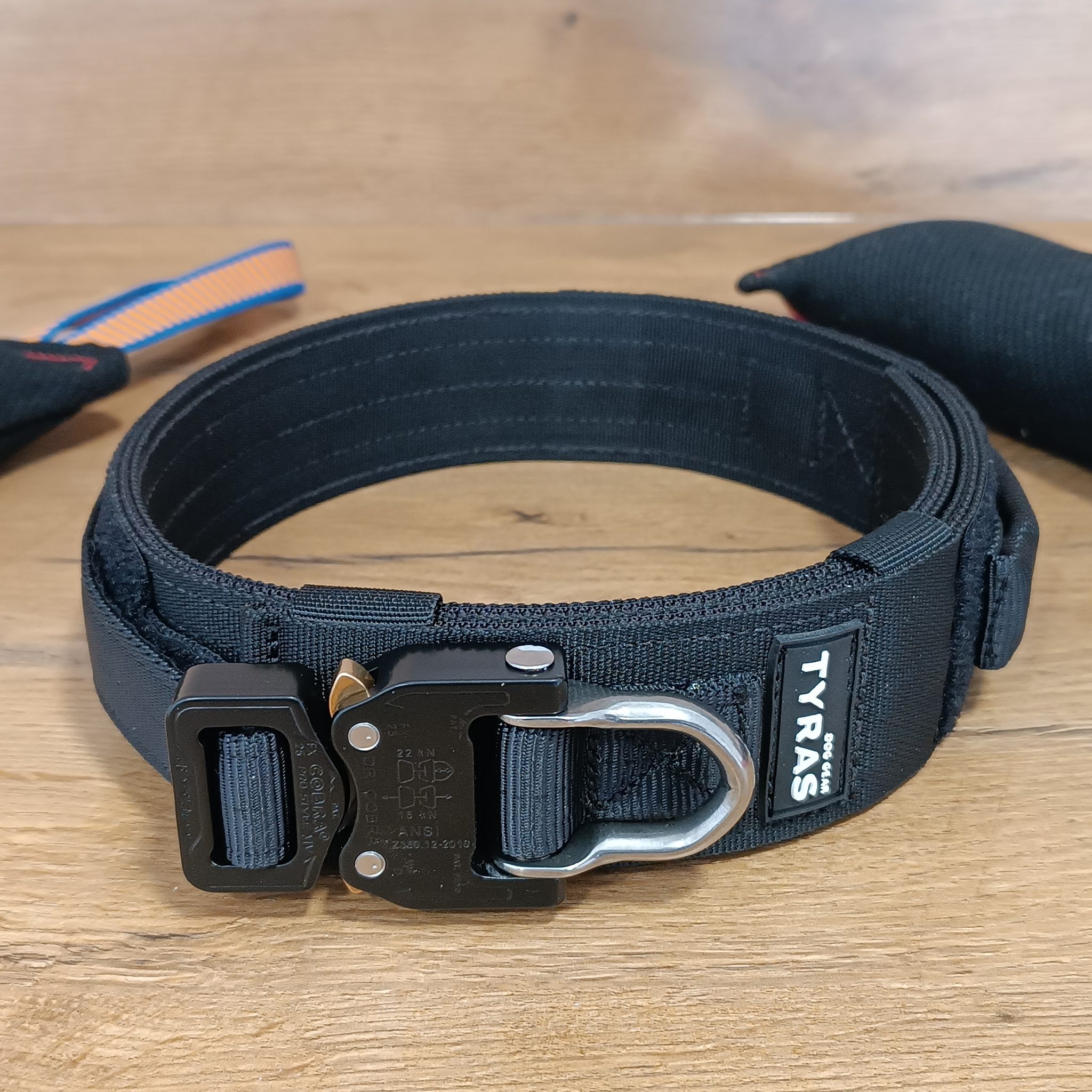
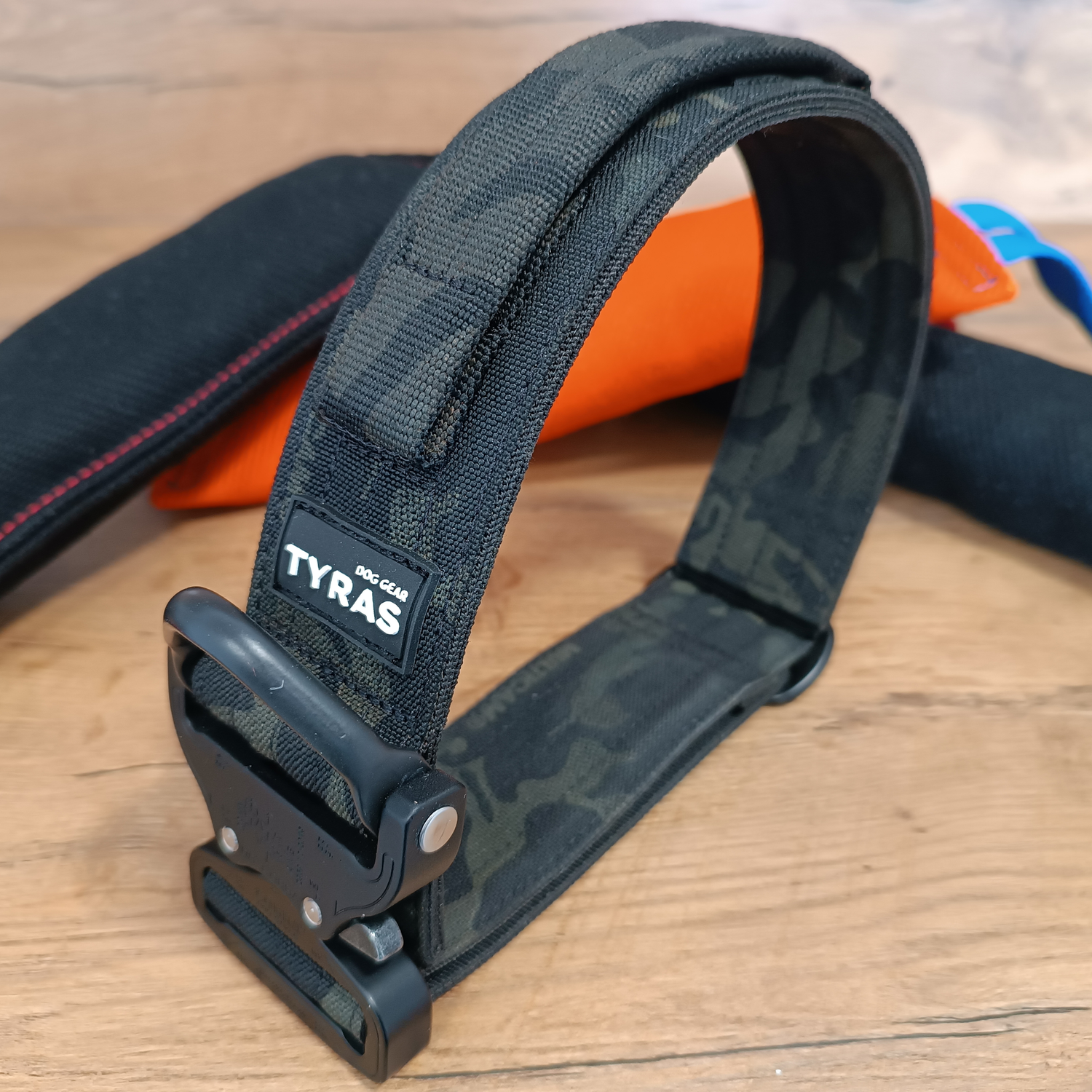
The COBRA® buckle is a load-bearing quick-release buckle made by AustriAlpin, an Austrian hardware manufacturer. It was originally developed for life-safety applications — climbing, rescue operations, and parachuting — where a fastener needs to be both extremely strong and reliably releasable under pressure.
What sets it apart from a standard side-release buckle:
Dual-release mechanism. It requires simultaneous pressure on both release tabs to open. Accidental one-sided release is mechanically eliminated.
Locked under load. It will not open while under tension. The locking mechanism engages tighter as force increases.
Rated tensile strength. High-end versions like the COBRA® PRO STYLE D-RING carry a rated tensile strength of 18 kN — the same standard used in climbing and rescue hardware.
One thing worth knowing: COBRA® is a registered trademark of AustriAlpin. There are imitation buckles on the market that copy the shape — but without the load ratings, material standards, or certifications of the original.
Do you actually need one for a dog collar?
It depends on the dog.
For a relaxed working line Labrador on a park walk, a quality standard buckle does the job it was designed for. No argument there. A personal perspective: To put this into context—myself, I have led a ultra-relaxed 68 kg Great Dane for years with a collar utilizing a high-quality plastic buckle without any issues.
Because weight isn't the real problem here—dynamic force is.
The case for rated hardware starts when the behavior and the environment change. Large, powerful dogs — working-line Shepherds, Malinois in drive, Cane Corsos, or even that same Great Dane if suddenly triggered into a high-velocity lunge — generate massive shock loads that standard buckles were never engineered to absorb. It is not a catastrophic failure risk on day one, but repeated high-stress cycles cause micro-fatigue in ways that aren't visible until something gives at the wrong moment.
The COBRA® handles that differently. The more force applied, the more securely it locks. For professional K9 handlers, that predictability is simply a baseline requirement. For owners of large or powerful breeds, it removes one variable from the equation — the hardware either holds or it doesn't, and with rated components, you know which one it is before anything happens.
Collar width: why it matters more than most people think
Most collars are chosen by looks or price. Width is the variable that actually affects the dog.
A 50 mm collar distributes pressure across a significantly larger surface area than a standard 25 mm collar. For large breeds or dogs doing heavy work, that difference matters — less concentrated pressure on the neck and onto the dog's trachea during high-load moments.
A simple rule of thumb: measure the width of the dog's nose. The collar should be at least that wide, a width of 40-50 mm is the standard for large working breeds and serious protection or sport work.
What makes a working dog collar worth the investment?
A few principles that hold across breeds and applications:
Width matched to the dog. 40–50 mm for large, active breeds. Wider webbing distributes force, narrower webbing concentrates it.
Rated components throughout. Webbing, stitching, D-ring, and buckle should all be rated to match what the dog is capable of generating. The weakest link determines the actual strength of the collar.
Rigid construction. Multi-layer mil-spec webbing holds its shape under load. Thin or flexible collars can twist and bunch under tension, which shifts pressure to a narrower point on the neck.
Functional attachment points. Professional duty collars include a loop panel for agency ID, name tapes, or warning patches — a practical detail that matters in operational contexts.
The short version
A COBRA® buckle is a load-rated, dual-release fastener built for applications where predictability matters. For companion dogs in low-stress environments, it's a premium choice focused on longevity. For large or powerful breeds — and for working dogs in active service or protection sport — it's simply the appropriate hardware for the forces involved.
The gear either matches the dog or it doesn't. Rated components make that answer straightforward.
→ Everyday D-Ring Cobra50 — 18 kN rated, genuine AustriAlpin COBRA® PRO hardware, 50 mm width for large and powerful breeds. Technical specs and ordering options here.